Friday, August 26, 2011

Energy Upgrade California Offers Thousands in Savings!


Would you like to save up to $4,000 for replacing your furnace, air conditioner, upgrading your attic insulation, changing out old windows, or upgrading an old water heater? Read on...

Did you know that our homes produce more carbon emissions than ordinary passenger vehicles! It's true. They account for nearly 21% of our countries greenhouse gas emissions. That seems unbelievable! But, when you think about it, there have been very few standards ever put in place when it comes to building a home, in fact, it wasn't until the late 70's when California enacted an energy code. We have hundreds of thousands of homes built before then! And therefore, our homes (especially older home stock) were built inefficiently.

Inefficiency directly relates to energy consumption, and the dollar amount we spend each month to our public utility -- PG&E being the primary supplier of natural gas and electricity in Northern California.

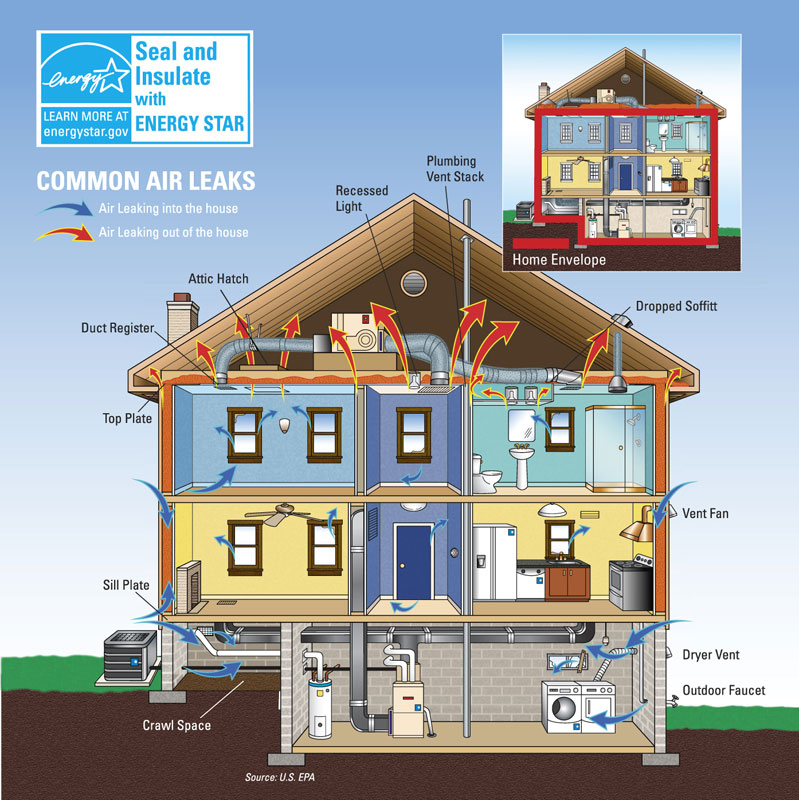
When it comes to energy consumption, we must view our house as a system, because every component works together to create efficiency. The heating and cooling systems would work more effectively and efficiently if the building envelope was sealed tight, if the insulation was enhanced, if air ducts were sealed and insulated to the max, http://www.blogger.com/img/blank.gifwindows upgraded, etc. When you create a "system" that works together, you not only save money, but you also improve comfort, indoor air quality, lower carbon emissions, etc. The list goes on!

A home energy upgrade makes sure that each piece of this system is designed to function at it's max, so your home is more efficient.

How do you get the rebates? Learn more about the process and program details by contacting Sandium, or visiting https://energyupgradeca.org/overview


Thinking about having your ducts cleaned?


We get calls all the time regarding duct cleaning. Many homeowners do it on a regular basis as a way to keep their system clean. Unfortunately we always have to disappoint them when explaining Sandium does not offer these services.

We don't do it because we don't believe it offers any real benefits to those homeowners who run their system on a regular basis -- which is most homeowners. Because when the system is in operation, whatever airborne particles (large and small) are going to get discharged out of your vents anyway.

The low cost air duct cleaners use a vacuum that supposedly would capture the dust, but the vacuum power is so low that its like vacuuming your carpet from 6" above (how effective is that!?). The better cleaners use a rotating brush and snaking device to get into your duct system, but then you just run the risk of shredding common ducting types like wire-flex, which leads to leakage in your duct system. Duct leakage is already a major problem, with an average of about 30% leakage in an average home's duct system! That's like filling your gas tank to the top, and then losing 1/3 of it before you even leave the station! Beyond the tearing and duct leakage problem, you are simply just stirring up dust that was otherwise settled and caked in and not airborne.

There are situations that justify duct cleaning. For example: If your system has been invaded by critters and you want to get rid of any droppings left inside AFTER your repair the ducts. Or you see chunks of dust or dark matters coming out of your vents. Or, if you are planning to turn on a system that has been sitting idle for over a year.

I'm not making this stuff up! Follow the link below to the Environmental Protection Agency's (EPA) website which has a white paper on this exact matter.

I'll leave you with a quote from the EPA: "Duct cleaning has never been shown to actually prevent health problems. Neither do studies conclusively demonstrate that particle (e.g., dust) levels in homes increase because of dirty air ducts."

Enjoy the reading!

http://www.epa.gov/iaq/pubs/airduct.html

Energy Efficient Tax Credit 2011


After digging for available rebates, what else is there to help off-set the cost of your new energy efficient HVAC system and home improvement project? How about a Federal Tax Credit!

A tax credit directly lowers your tax bill dollar for dollar, whereas a tax deduction simply shaves money off your taxable income.

Take advantage of a tax credit up to $500 through the end of 2011. For some, this credit simply helps boost you into a higher efficiency heating/ac equipment upgrade, among other things.

From an economic point of view these provisions is the best way to jump start the US economy because all the stimulus dollar will be spent within the US on labor and materials. It helps companies like us to keep our employees working and hire more workers. The projects help increase home energy efficiency which lessen our dependency on fossil fuel.

Detailed information of the tax credit can be found from the following link
http://www.energystar.gov/index.cfm?c=tax_credits.tx_index

Sandium can help you review these credits, and find how you can take advantage of it to invest in your home, and help stimulate our economy.

Monday, February 2, 2009

Home Attic and Floor Sealing

One of the elements of energy loss in homes that is often forgotten is the infiltration of hot/cold air from the attic and crawlspace through gaps in the ceiling or floor.

Since the attic and crawlspace are opened to the atmosphere through various vents, there is usually a air pressure differential between them and the living space. The pressure differential is also driven by the comfort system duct leakage. The result is air movement in or out of the living space into the unconditioned crawlspace and attic.

In the summer, air from the attic is often at a super heat condition from the roof load and close to outside temperature in the winter. Crawlspace air is usually cooler but can create air quality issues. That is why it is a good idea to seal those air gaps whenever possible to eliminate those issues. Air gaps in the living space can be found at recessed light openings, plumbing/electrical penetrations, walls with missing top plates, and other unsealed wall joints.

Since many of these air gaps can be buried when insulation is installed, we recommend a thorough sealing of them before insulation work is done.

More information about the sealing can be found at the Department of Energy's Energy Star website.

http://www.energystar.gov/index.cfm?c=home_sealing.hm_improvement_sealing

Wednesday, January 21, 2009

Home Insulation

Most homeowners understand the concept of insulating the home. It helps the heating and airconditioning system works better and more efficiently. It also keeps the indoor condition from the more extreme temperature swings of the outdoor environment. What is sometimes missing is the knowledge of how much insulation is enough and what type should be used.

Insulation level is measured in R-value. The higher the R-value, the more resistance there is for heat transfer. Current minimum standard for new homes calls for R30 and we recommend consideration for R38 if space is available for Bay Area customers. You can find out how much insulation you have by checking out the depth of the existing insulation. Every inch of blown in insulation equates to roughly R2.5-4 of insulation value. So for example a house that has 3 inches of insulation has a rough R value of 7.5 to 12. That means the house has about 1/3 of the insulation compared with today’s minimum standard.

More information about insulation can be found at this Department of Energy fact sheet

http://www.ornl.gov/sci/roofs+walls/insulation/ins_08.html

Next time we will talk about an important step that is missed from many insulation project - attic air gap sealing

Wednesday, January 7, 2009

Green Home Performance in South Bay

In addition to being a heating and air conditioning contractor, we also engage in home performance work. It is the disipline of analyzing your home energy use and come up with ways to reduce it. Many times it involve your heating and air conditioning system but not limited to it. Some of the projects involve attic air gap sealing, insulation, duct sealing etc... which as a whole can dramatically reduce the total energy consumption.

It is a relatively new field and unfortunately does not get as much press or marketing dollars compare with the multi-billion dollar solar industry. However, this is the low hanging fruit for energy savings that homeowner should consider before or in conjunction with the solar panels. An average home can be tightened up and insulated for a few thousand dollars with no ongoing maintenance cost which can drop the energy consumption 30% or more. In this era of volatile energy pricing we can all do more to reduce our individual energy consumption and that is exactly what green home performance is all about.

we will add more information and case studies on our website as we move along here.

Wednesday, December 17, 2008

Happy Holidays and blog address change

Due to some blog set up issues we have recently moved all the old blogs to this new address. Thats why you may noticed the dates have all changed. All new entries will appear at this new address.

Happy Holidays